

There is something rather interesting about the phrase nursing student. For most it represents a temporary chapter in life. We enrol in a course, spend years studying, sit for examinations, complete assignments, and eventually graduate. The student chapter closes, and a new professional identity begins.
But what if being a nursing student isn’t simply a phase we are supposed to outgrow? What if it is a mindset worth carrying with us throughout our lives?
I have come to believe that some of the most valuable lessons we learn have very little to do with certificates, qualifications or the letters we place after our names. And nowhere does this feel more relevant than in healthcare, where knowledge is constantly evolving and every person we encounter has something to teach us.
My own nursing journey has certainly not followed the path I originally imagined. Yet, somewhere along the way, I discovered something that has become an important part of who I am.
I may not always be a nursing student in the academic sense, but I will always be a nursing student at heart.
And perhaps that is something worth celebrating.
My Nursing Journey: More Than Just a Qualification
When I first embarked on my nursing studies, I had a particular destination in mind. Like so many others entering the profession, I wanted to become a qualified nurse, equipped with the knowledge and skills to make a meaningful difference in people’s lives.
What followed was five years of part-time university education, countless hours spent studying, assignments, examinations, and more than 2,500 hours of clinical placements.
Those years were anything but easy. Balancing academic responsibilities with the demands of everyday life as a mother of three required determination, sacrifice and, at times, more resilience than I realised I possessed.
There were moments of achievement that filled me with pride. There were also moments of exhaustion, uncertainty and disappointment. Nursing education challenged me intellectually, physically and emotionally, often pushing me far beyond what I believed were my limits.
And despite all those years of effort, my journey did not end with the professional registration I had worked towards.
I did not become a registered nurse.
It is a truth that I have had to come to terms with, and one that I no longer feel the need to hide.
Of course, I would be dishonest if I claimed that the outcome never disappointed me. When you invest so much of yourself in something, it is only natural to feel the weight of an ending you had not anticipated. But with time and reflection, I have come to understand that not reaching a particular destination does not necessarily mean the journey was without value.
My nursing education gave me knowledge, clinical experience, a deeper understanding of health and illness, and an appreciation of the extraordinary complexities of the human body.
More importantly, it changed the way I see people. It taught me to look beyond symptoms, to question rather than assume, and to recognise that every individual comes with their own experiences, fears, beliefs and needs.
Those lessons did not disappear simply because I did not obtain registration. They remain part of me, influencing how I approach my work in care and how I continue to understand the world around me.
And perhaps that is where my appreciation for lifelong learning truly began.
Why Lifelong Learning Is Important in Nursing
Healthcare is not a field in which we can reasonably expect to learn everything once and then rely on that knowledge indefinitely. Medical research continues to develop. Treatments change. New technologies emerge. Clinical guidelines are reviewed, and practices once considered appropriate may eventually be replaced by safer or more effective approaches.
What we understand about health and disease today is not necessarily what we understood twenty years ago, and it certainly will not be everything we know twenty years from now.
This is precisely why lifelong learning is important in nursing.
Nursing requires much more than remembering information from textbooks or successfully completing examinations. It demands the ability to think critically, evaluate evidence, adapt to new situations and recognise when our existing knowledge may no longer be sufficient.
For registered nurses, continuing professional development is an essential part of maintaining competence and delivering safe, evidence-based care. The specific requirements vary between countries and regulatory bodies, but the underlying principle remains the same: professional learning does not end with qualification.
And I believe this principle is just as valuable for nursing students, healthcare assistants, carers and anyone with an interest in health and wellbeing.
Consider how much has changed in healthcare over recent decades. Our understanding of infection prevention, chronic disease management, mental health, patient-centred care and many other areas has continued to develop.
Even something as seemingly straightforward as communicating with a patient requires ongoing learning. We encounter people from different cultures, backgrounds and circumstances, each bringing their own expectations and understanding of health. The willingness to learn helps us respond to these differences with greater awareness and sensitivity.
Ultimately, lifelong learning is not simply about knowing more. It is about using what we learn to care more safely, thoughtfully and effectively.
Some of the Greatest Lessons come from Patients

One of the most valuable things my nursing education taught me is that learning does not take place exclusively in lecture halls, libraries or clinical skills laboratories. Sometimes, the most memorable lessons come from the people we care for.
Textbooks can explain the clinical characteristics of a condition. They can describe symptoms, treatment options and potential complications. They can teach us the importance of communication, dignity and person-centred care. But there is something profoundly different about encountering those realities in another human being.
A person living with a chronic illness may teach us about resilience in ways that no lecture ever could. Someone experiencing fear or uncertainty may remind us how important it is to listen, even when we cannot immediately offer a solution. A person who depends on others for everyday activities may help us appreciate how much dignity, independence and personal choice matter. And sometimes, what appears to be a small gesture to us can mean the world to someone else.
A few extra minutes of conversation. Remembering a personal preference. Explaining something patiently. Recognising when someone needs reassurance rather than another instruction… These experiences remind us that healthcare is not simply about treating conditions. It is about caring for people.
Through my own work in care, I continue to encounter situations that encourage me to reflect, adapt and learn. No two individuals are exactly alike, and even familiar situations can present unexpected challenges. That is why I believe experience should never make us complacent. Instead, it should make us more aware of how much there is still to understand.
The people we care for are not merely recipients of care. Very often, they are among our greatest teachers.
Learning Isn’t Always About Success
We tend to celebrate learning through visible achievements: Passing an examination. Completing a degree. Receiving a certificate. Securing a professional position. And rightly so. These milestones represent effort, dedication and accomplishment.
But what about the lessons that emerge when things do not go according to plan?
What about the examination we struggle with, the placement that challenges our confidence, or the goal that remains just beyond our reach? Are those experiences somehow less valuable? I don’t believe they are.
Looking back on my nursing journey, some of the experiences that taught me the most were also among the most difficult. There were moments when I questioned my abilities and wondered whether all my efforts had been enough. Not achieving registration was particularly difficult because it meant accepting that the future I had imagined would not unfold in quite the way I had hoped. For a long time it can be tempting to measure our worth against the outcomes we achieve.
But I have gradually come to see learning differently. Sometimes, learning means recognising our limitations. Sometimes, it means accepting constructive criticism, acknowledging mistakes or discovering that we need to approach something in another way. And sometimes, it means finding the courage to move forward when a particular door has closed.
Of course, in healthcare, mistakes and limitations must be taken seriously. Patient safety, professional competence and accountability are not matters that can be brushed aside with positive thinking. But recognising those responsibilities is itself an important part of becoming a thoughtful learner. There is a difference between pretending that setbacks do not matter and choosing not to allow them to define everything about us.
I cannot change the outcome of my nursing education. What I can do is recognise the knowledge and experiences I gained, remain honest about my professional boundaries, and continue building upon what I have learned.
Not every lesson comes with a certificate. And not every meaningful achievement can be measured by a qualification.
How to Embrace Lifelong Learning in Everyday Nursing Practice
When we hear the phrase continuing education, it is easy to imagine formal courses, additional degrees, conferences and professional training programmes. These certainly have an important place, particularly when specific qualifications or competencies are required.
But lifelong learning can also be found in the smaller habits we develop every day. It begins with curiosity; with being willing to ask a question rather than pretending we already know the answer; with recognising that experience, however valuable, does not automatically make us experts in everything.
There are many ways to cultivate a lifelong learning mindset.
- Stay curious and keep asking questions. Never allow embarrassment or pride to prevent you from seeking clarification. In healthcare, recognising uncertainty and asking an appropriately qualified professional can be essential for safety.
- Reflect on your experiences. Taking time to consider what went well, what could have been approached differently and what you might do next time can transform everyday experiences into valuable learning opportunities.
- Read and remain informed. Reliable healthcare publications, professional guidelines and evidence-based resources can help us understand new developments and question outdated assumptions.
- Learn from others. Experienced colleagues, educators, patients and families can all offer perspectives that broaden our understanding.
- Be open to feedback. Constructive criticism is not always comfortable, but it can help us recognise areas for improvement that we might otherwise overlook.
- Remember that learning extends beyond clinical knowledge. Communication, emotional intelligence, cultural awareness, compassion and self-reflection are equally important areas for personal development.
For those working in regulated healthcare professions, these informal learning habits complement rather than replace mandatory training, supervision and professional development requirements.
The important thing is to remain willing to grow. After all, we do not need to know everything. We just need to recognise that there will always be something more worth learning.
Why I’ll Always Be a Student at Heart

Perhaps the most unexpected outcome of my nursing journey is that I have grown rather fond of the identity I once expected to leave behind.
Student Nurse Life.
When I first chose that name for my website, it reflected a particular chapter of my life. I was studying nursing, navigating the challenges of university education and discovering what it meant to enter the world of healthcare.
At the time I imagined that one day I would move beyond that identity. But life has a curious way of changing our perspective.
Today, the name means something different to me. It no longer represents only the years I spent working towards a nursing qualification. It represents curiosity, perseverance, reflection and the understanding that education is not confined to a particular institution or period of our lives. It represents my continued interest in health, my appreciation of holistic wellbeing and my belief that caring for others begins with recognising the whole person.
It also represents the freedom to keep exploring. To read about something simply because it interests me. To question what I thought I knew. To discover new perspectives. To share experiences, reflections and information that might be useful to someone else.
That is what I hope Student Nurse Life can continue to become: a place where learning is encouraged, questions are welcomed and personal experiences are valued alongside reliable knowledge. A place for nursing students, healthcare workers, carers and anyone who believes that growth does not have an expiry date.
I do not claim to have all the answers. In fact, the older I become, the more aware I am of how much I still have to learn. But perhaps that is not a weakness. Perhaps it is one of the most valuable qualities a learner can possess.
The Day We Stop Learning…
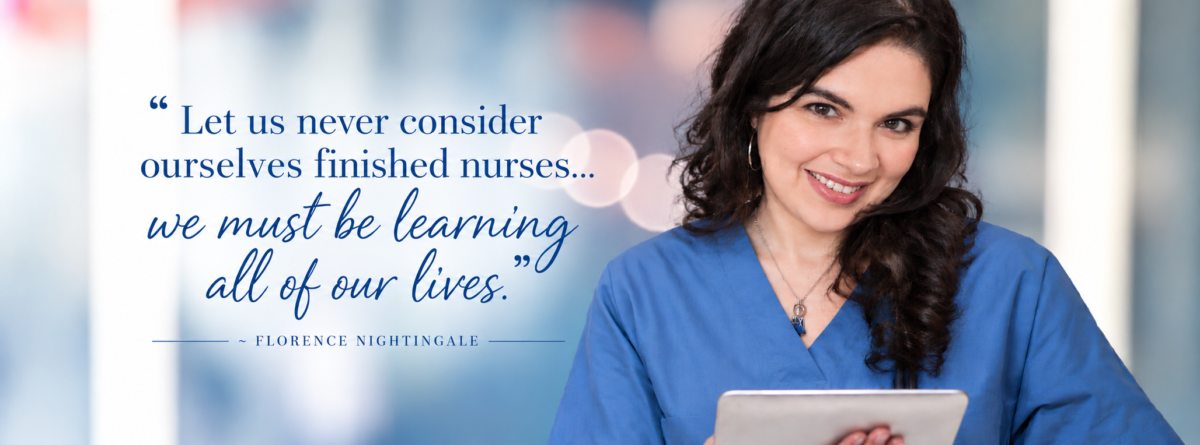
Florence Nightingale is often associated with a powerful reminder about the importance of continuing to learn throughout our lives. It is a philosophy that resonates deeply with me, not only because of my background in nursing education, but because of everything my own journey has taught me.
We are never truly finished learning. Not when we complete a course. Not when we earn a qualification. Not when we gain years of experience. And certainly not when life takes us somewhere different from where we originally intended to go.
There will always be new discoveries, unfamiliar challenges, different perspectives and opportunities to become a little more knowledgeable, compassionate and understanding than we were yesterday.
My journey towards becoming a registered nurse may not have ended as I once hoped. But my journey as a learner is far from over. And if there is one thing I have come to embrace, it is this:
I may not have become the nurse I once dreamed of being, but I have never stopped being the person who wanted to learn, understand and care.
So yes, once a nursing student, always a nursing student.
And I wouldn’t have it any other way.
Fill in your email address below to receive new blogposts in your inbox as soon as they’re published 🙂

Claire is keen about public education on health-related subjects as well as holistic patient-centered care. She is also passionate about spreading positivity and awareness on various subjects through her blog Student Nurse Life.
